Sousaphone: A Simple Guide to This Powerful Brass Instrument
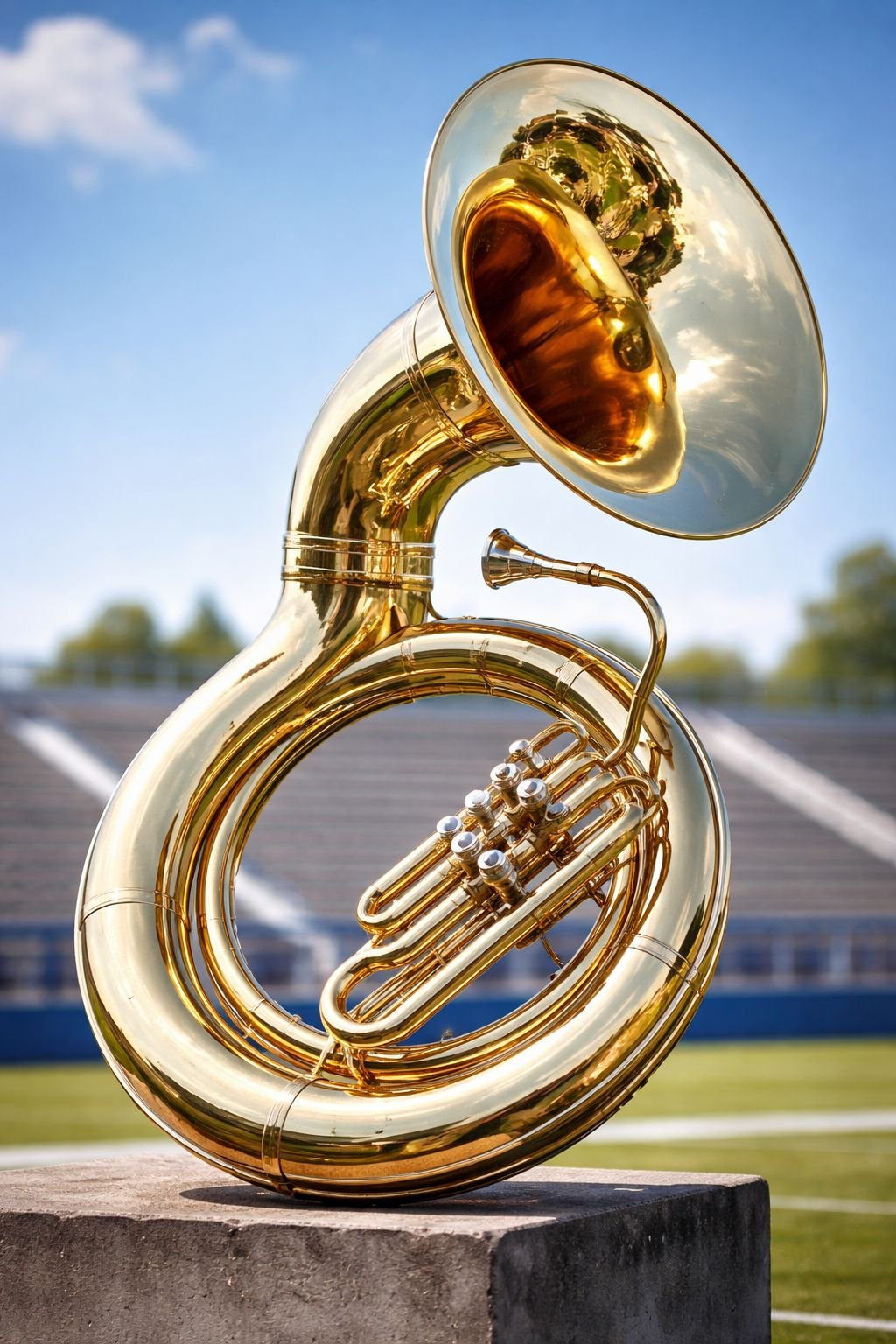
The sousaphone is a large brass instrument that is often seen in marching bands, school bands, and street music groups. It produces deep and powerful bass sounds that help support the music played by the whole band. One special thing about the sousaphone is its circular shape. The instrument wraps around the player’s body and rests on the shoulder. The large bell sits above the player’s head and usually faces forward so the sound travels toward the audience. The sousaphone was created to make it easier for musicians to play bass notes while walking or marching. Because of this design, it became a very important instrument in marching bands around the world. In this article, you will learn about what a sousaphone is, its history, parts, types, how it works, and where it is used.
What Is a Sousaphone?
A sousaphone is a large brass instrument that belongs to the tuba family. It is designed to wrap around the player’s body so it can be played while standing or marching. The instrument produces low bass notes, which give strength and rhythm to the music.
Key Features of a Sousaphone
Here are some important features of the instrument:
-
Large round shape
-
Wraps around the player’s body
-
Bell faces forward
-
Produces deep bass sound
-
Usually tuned in B-flat (B♭)
These features help the sound travel far, which is useful for outdoor performances.
Basic Information About the Sousaphone
| Feature | Details |
|---|---|
| Instrument family | Brass |
| Related instrument | Tuba |
| Main use | Marching bands |
| Typical pitch | B♭ (B-flat) |
| Playing position | On the shoulder |
| Sound type | Deep bass |
History of the Sousaphone
The sousaphone was created in the late 1800s. It is named after John Philip Sousa, a famous American band leader and composer.
Sousa wanted a bass instrument that could:
-
Be played while marching
-
Project sound clearly outdoors
-
Be easier for musicians to carry
Before the sousaphone, bands often used an instrument called the helicon, which also wrapped around the body. However, the helicon did not project sound as well. Because of this, instrument makers developed the sousaphone.
Early Designs
The first sousaphones had a bell that pointed upward. These were called rain-catcher sousaphones because the bell could collect rain during outdoor performances. Later designs changed the bell to face forward, which made the sound louder and clearer for audiences.
Development of the Instrument
| Time Period | Changes |
|---|---|
| Late 1800s | First sousaphones built |
| Early 1900s | Rain-catcher bell used |
| Mid 1900s | Forward bell design becomes common |
| Modern day | Lightweight fiberglass versions introduced |
Parts of a Sousaphone
A sousaphone has several important parts that work together to produce sound.
Main Parts
-
Mouthpiece – where the player blows air
-
Lead pipe – moves air into the instrument
-
Valves – change the pitch of notes
-
Tubing – long metal tubes that carry sound
-
Bell – large opening that projects sound
Function of Each Part
| Part | What It Does |
|---|---|
| Mouthpiece | Player blows air into it |
| Lead pipe | Sends air into the tubing |
| Valves | Change pitch of the notes |
| Tubing | Carries sound vibrations |
| Bell | Makes the sound louder |
Materials Used to Make Sousaphones
Sousaphones are made from different materials. Each material affects the weight and sound of the instrument.
Brass Sousaphones
Brass is the traditional material used to make the instrument.
Advantages:
-
Rich and strong sound
-
Durable
-
Used by professional players
Disadvantages:
-
Heavier to carry
Fiberglass Sousaphones
Many school bands use fiberglass models.
Advantages:
-
Much lighter
-
Easier to carry while marching
-
Good for beginners
Disadvantages:
-
Sound is slightly different from brass
Read also: TabooTube
Comparison of Materials
| Material | Weight | Sound | Common Use |
|---|---|---|---|
| Brass | Heavy | Warm and powerful | Professional bands |
| Fiberglass | Light | Bright | School marching bands |
How the Sousaphone Makes Sound
The sousaphone works the same way as other brass instruments.
Steps in Sound Production
-
The player blows air into the mouthpiece.
-
The lips vibrate to create sound.
-
The sound travels through the tubing.
-
The bell sends the sound outward.
The valves change the length of the tubing, which changes the pitch. Most sousaphones have three valves, but some advanced models have four.
Range and Tone
| Feature | Description |
|---|---|
| Pitch | Usually B♭ |
| Sound | Deep and strong |
| Role | Provides bass notes |
The low notes from the sousaphone help support the whole band.
Types of Sousaphones
There are a few different types of sousaphones.
Brass Sousaphone
This is the traditional version used by many musicians.
Features:
-
Heavy
-
Rich tone
-
Durable
Fiberglass Sousaphone
This type is often used by students and marching bands.
Features:
-
Lightweight
-
Easy to carry
-
Durable for outdoor use
Rain-Catcher Sousaphone
This is an older design.
Features:
-
Bell faces upward
-
Rare today
How to Play the Sousaphone
Learning to play the sousaphone requires good posture and breathing.
Playing Position
-
The instrument rests on the shoulder
-
The bell sits above the head
-
The player stands or marches while playing
Important Techniques
Breathing
Players must use deep breathing to produce strong bass notes.
Embouchure
Embouchure means how the lips are placed on the mouthpiece.
Good embouchure helps produce:
-
Clear sound
-
Good pitch
-
Smooth notes
Beginner Practice Tips
Here are some helpful tips for beginners:
-
Practice long notes
-
Learn basic scales
-
Focus on steady airflow
-
Practice a little every day
Where the Sousaphone Is Used
The sousaphone is used in many types of musical groups.
Common Uses
-
Marching bands
-
School bands
-
College pep bands
-
New Orleans brass bands
-
Street music groups
-
Parades and festivals
Why Marching Bands Use Sousaphones
| Reason | Explanation |
|---|---|
| Easy to carry | Wraps around the body |
| Loud sound | Bell faces forward |
| Strong bass | Supports the band’s rhythm |
| Good for movement | Players can march while playing |
Famous Sousaphone Brands
Several companies make high-quality sousaphones.
| Brand | Known For |
|---|---|
| Yamaha | Reliable instruments |
| Conn | Historic brass maker |
| Jupiter | Good student models |
| King | Strong marching instruments |
Care and Maintenance
Taking care of the instrument helps it last longer.
Cleaning
-
Clean the mouthpiece regularly
-
Wash tubing when needed
-
Remove dirt and buildup
Valve Care
Valves should be oiled often so they move smoothly.
Storage
-
Store the instrument in a case
-
Keep it away from moisture
-
Avoid extreme heat or cold
Fun Facts About the Sousaphone
-
A sousaphone can weigh 20–30 pounds.
-
It is one of the largest instruments used in marching bands.
-
Its circular shape makes it easy to recognize in parades.
Frequently Asked Questions
Is a sousaphone the same as a tuba?
No. The sousaphone is designed for marching and wraps around the body, while a tuba is usually played while sitting.
Why do marching bands use sousaphones?
Because they are portable, loud, and perfect for outdoor performances.
How heavy is a sousaphone?
Most instruments weigh between 20 and 30 pounds, depending on the material.
Conclusion
The sousaphone is an important brass instrument that provides the deep bass sound in many marching bands and brass ensembles. Its unique wrap-around design makes it easier for musicians to play while marching. From its invention in the late 1800s to its use in modern bands today, the sousaphone has become a key part of band music. Its powerful sound, large shape, and strong presence make it one of the most exciting instruments in marching performances. Whether heard at a parade, football game, or street festival, the sousaphone continues to bring strong rhythm and energy to music around the world.