
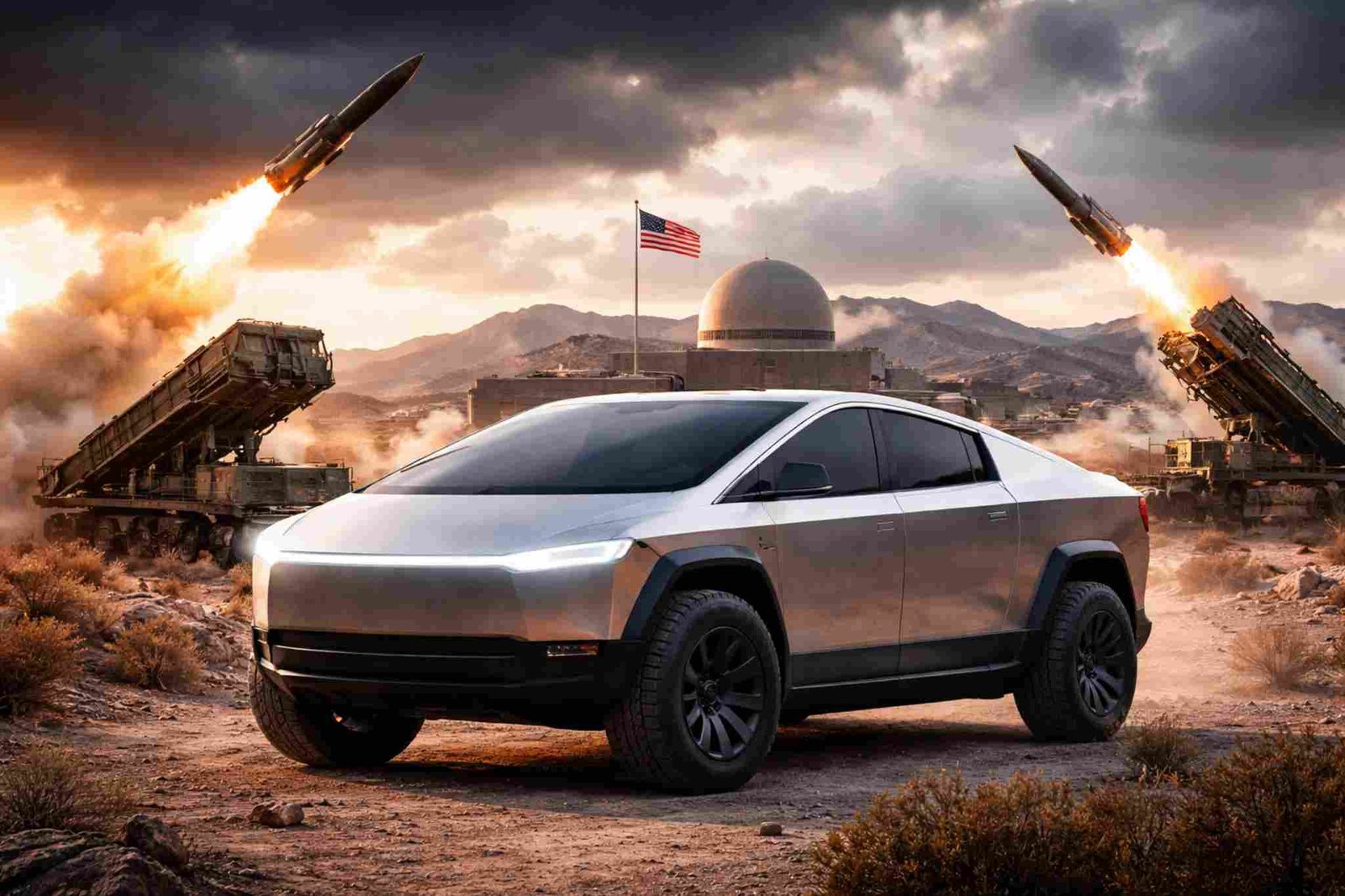
Pentagon Big Tech Tesla Cybertruck: A Simple Explanation
A recent report says the U.S. Air Force wants to buy two Tesla Cybertrucks. But they do not want them to drive on bases or carry soldiers. They want to use them as targets for missile testing. This may sound strange at first. Why would the military buy an electric pickup truck just to blow it up? The answer helps us understand how modern warfare is changing and how the Pentagon is working more closely with big technology companies.
1. What Is Happening?
The U.S. Air Force plans to buy about 33 vehicles for missile and weapons testing. Out of those 33 vehicles, two would be Tesla Cybertrucks.
These vehicles would be sent to:
White Sands Missile Range, New Mexico. This is a large military testing area where the U.S. tests rockets and missiles. The vehicles are not meant to be used. They are meant to be placed on the testing field and used as targets.
Quick Facts
| Topic | Details |
|---|---|
| Who wants the vehicles? | U.S. Air Force |
| Total vehicles | About 33 |
| Tesla Cybertrucks | 2 |
| Purpose | Missile testing targets |
| Location | White Sands Missile Range |
| Will they be driven? | No |
2. Why the Tesla Cybertruck?
Many people asked: why this truck? The Cybertruck is different from normal pickup trucks.
Here are some reasons it may have been chosen:
Key Features of the Cybertruck
-
Made with stainless steel body
-
Has a very sharp and angular design
-
Looks very different from normal trucks
-
Uses a 48-volt electrical system instead of the common 12-volt system
Because of these differences, the truck may react differently when hit by weapons. The military wants to understand:
-
How missiles hit unusual vehicle shapes
-
How steel bodies respond to explosions
-
How modern electric vehicles behave during attacks
If this type of vehicle appears in real battle areas someday, the military wants to be ready.
3. The Vehicles Do Not Need to Work
Reports say the Cybertrucks do not need to run.
They:
-
Do not need working engines
-
Only need to be rollable or towable
-
May have fluids drained
-
May have batteries removed
This shows that the Air Force does not care about driving the trucks. They care about how the outside of the truck reacts to weapons.
Target Vehicle Requirements
| Requirement | Why It Matters |
|---|---|
| Towable | Easy to move into position |
| Rollable | Looks realistic on the field |
| Can be non-working | Saves money |
| Fluids drained | Safety |
| Battery removal allowed | Lower risk |
4. Why Realism Is Important
Modern battlefields are changing.
In the past, wars were often between large armies using official military vehicles.
Today, conflicts often include:
-
Civilian vehicles
-
Commercial pickup trucks
-
Drones bought from stores
-
Regular electronics
Sometimes, fighters use normal-looking vehicles instead of military ones. If a vehicle like the Cybertruck becomes common around the world, it could appear in conflict zones. The military trains to prepare for many possible situations. Using real commercial vehicles makes training more realistic.
5. What Does This Have to Do with Big Tech?
This story also connects to a larger topic: the growing relationship between the Pentagon and big technology companies.
In recent years, the U.S. military has worked more with tech companies in areas like:
Areas of Cooperation
-
Artificial intelligence
-
Cloud computing
-
Satellites
-
Cybersecurity
-
Space technology
Tesla is mainly a car company. But it is part of a larger tech world. Its CEO, Elon Musk, is also involved in space and satellite businesses that work with the U.S. government. Because of this, some people see the Cybertruck story as another example of tech companies becoming more connected to defense. However, in this case, the trucks are not being used to help the military operate. They are simply targets.
6. Why Did This Story Get So Much Attention?
The purchase is small. It is only two trucks.
But it became big news for a few reasons:
-
The Cybertruck is very famous and controversial.
-
It has a unique and futuristic look.
-
The government named the brand directly.
-
The idea of blowing up an electric truck sounds dramatic.
If the Air Force had simply asked for “electric pickup trucks,” the story might not have received much attention.
The name “Tesla Cybertruck” made it interesting.
7. How Commercial Products Affect Modern War
Today, many wars include products that were not made for the military.
Examples include:
-
Consumer drones used for spying
-
Pickup trucks used to carry weapons
-
Smartphones used for communication
-
Satellite internet used in battle zones
This means the military must understand commercial technology.
Even something built for everyday use can become important in conflict.
8. Comparing a Normal Truck and the Cybertruck
Here is a simple comparison:
| Feature | Normal Pickup Truck | Tesla Cybertruck |
|---|---|---|
| Body | Painted steel or aluminum | Stainless steel |
| Shape | Curved | Sharp angles |
| Electrical System | 12 volts | 48 volts |
| Design | Traditional | Futuristic |
These differences may affect:
-
How sensors detect the vehicle
-
How missiles lock onto it
-
How explosions damage it
That is why testing matters.
9. What This Really Means
The military is not buying Cybertrucks to use in war. It is not turning into an electric vehicle fleet. It is not promoting Tesla.
Instead, it is:
-
Preparing for possible future battle situations
-
Testing how modern vehicles respond to weapons
-
Updating training to match real-world changes
The story shows how fast technology changes. When new products appear in everyday life, the military must study them too.
10. The Bigger Picture
This small purchase shows a larger trend:
-
Commercial technology and military planning are more connected than before.
-
Civilian products can affect defense training.
-
The Pentagon watches new technology closely.
The Cybertruck itself is not a military vehicle. But its design and materials are new and different. That makes it useful for testing.
Final Thoughts
The U.S. Air Force plans to buy two Tesla Cybertrucks to use as missile targets at White Sands Missile Range. It may sound unusual, but the goal is simple:
Train for the future.
Modern battlefields include commercial vehicles and new technologies. The military wants to understand how these vehicles behave under attack. In the end, this story is not really about Tesla. It is about how the military prepares for a world where civilian technology and warfare are more connected than ever before.