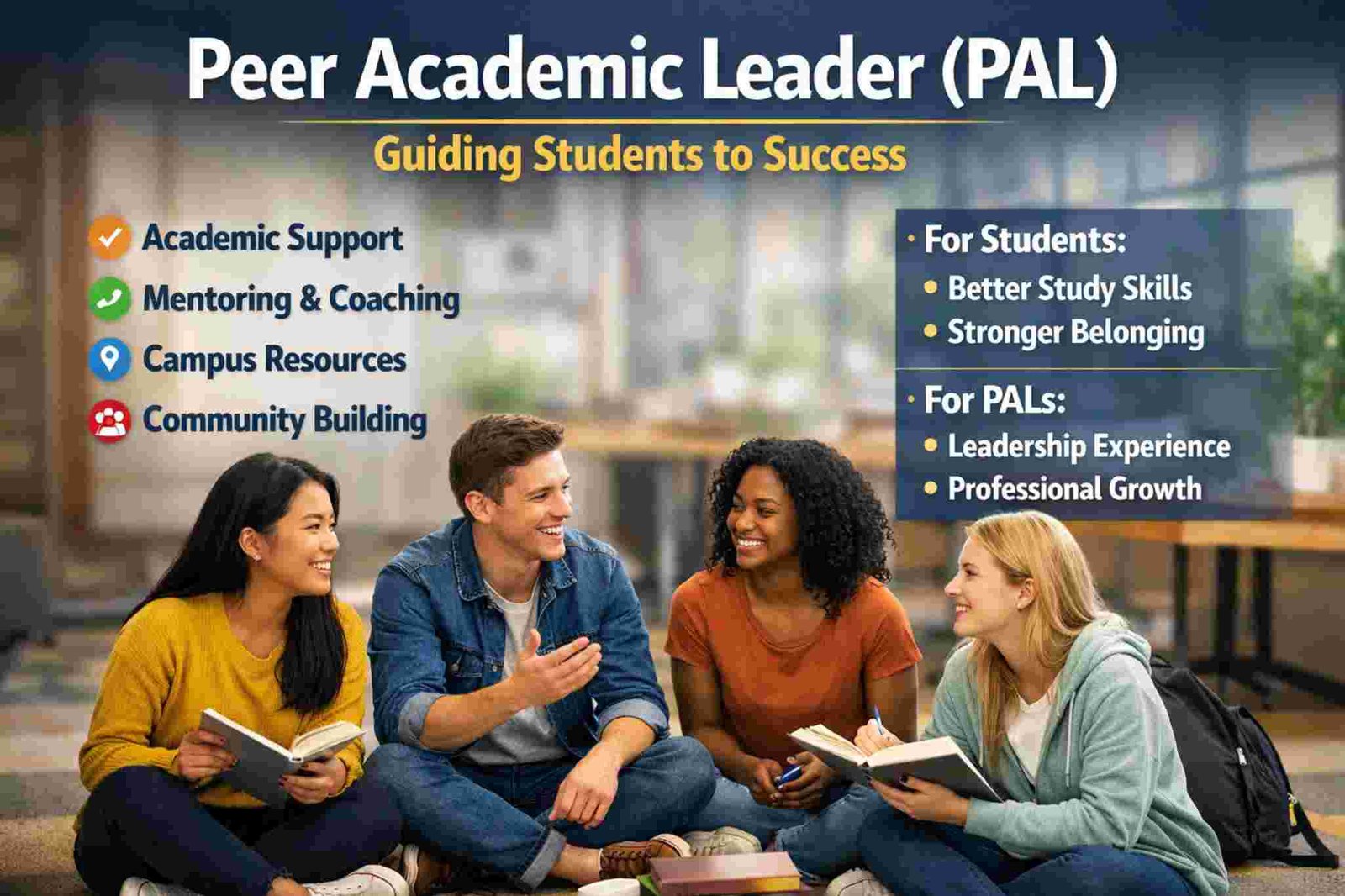
Peer Academic Leaders: Supporting Student Success in College
Colleges and universities want students to succeed. Many students face challenges when they first start college. They may struggle with time management, study skills, or understanding how the campus works. To help with these challenges, many schools use a program called Peer Academic Leaders (PALs).
A Peer Academic Leader is a trained student who helps other students succeed in their academic journey. PALs are usually upper-level students who have done well in their classes and have strong leadership skills. They support new or first-year students by guiding them, answering questions, and helping them adjust to college life.
This article explains what Peer Academic Leaders do, how programs are organized, and why they are important.
1. What Is a Peer Academic Leader?
A Peer Academic Leader (PAL) is:
-
A student mentor
-
A role model
-
A helper for academic success
-
A guide to campus resources
-
A student leader
PALs are not professors or professional advisors. They are students who understand what college is like because they have already experienced it. This makes them easy to talk to and relatable.
2. Goals of a Peer Academic Leader Program
Most PAL programs have clear goals. These goals help students feel supported and confident.
Main Goals
-
Help new students adjust to college
-
Improve study skills
-
Teach time management
-
Encourage students to ask for help
-
Build a strong campus community
-
Improve student retention (students staying in school)
-
Connect students to campus services
These goals help students succeed both inside and outside the classroom.
3. Responsibilities of Peer Academic Leaders
PALs have many responsibilities. Their work focuses on academic help, mentoring, and community building.
A. Academic Support
PALs help students improve their study habits.
Examples of academic support:
-
Leading study groups
-
Organizing review sessions before exams
-
Teaching note-taking methods
-
Sharing time management tips
-
Helping students set academic goals
-
Explaining how to prepare for tests
PALs focus on teaching students how to learn, not just giving answers.
B. Mentoring and Coaching
PALs also act as mentors. They meet with students to talk about challenges and goals.
Mentoring tasks include:
-
One-on-one meetings
-
Listening to student concerns
-
Giving advice based on experience
-
Encouraging students to stay motivated
-
Referring students to advisors or counselors when needed
PALs are trained to keep conversations private and professional.
C. Classroom Support (In Some Programs)
In some colleges, PALs work inside first-year classes.
Classroom duties may include:
-
Leading small group discussions
-
Helping students participate
-
Teaching short lessons about study skills
-
Supporting the instructor
This helps students feel more comfortable in class.
Read also: Active Recall vs. Passive Reading
D. Helping Students Find Resources
College campuses have many offices and services. New students may not know where to go for help.
PALs help students find:
-
Academic advising
-
Tutoring centers
-
Writing centers
-
Counseling services
-
Career services
-
Financial aid offices
PALs make it easier for students to use campus support systems.
E. Building Community
Feeling connected is important for success. PALs help students feel like they belong.
Community activities may include:
-
Study nights
-
Workshops on academic skills
-
Social events
-
Group meetings
-
Leadership activities
These events help students build friendships and feel supported.
4. Qualifications and Selection
Not every student can become a PAL. Schools choose students carefully.
Common Requirements
-
Minimum GPA (often 3.0 or higher)
-
Good academic standing
-
Leadership experience
-
Strong communication skills
-
Recommendation from a professor or staff member
Selection Process
| Step | What Happens |
|---|---|
| Application | Student submits forms and answers questions |
| Recommendation | Faculty or staff member supports application |
| Interview | Student answers questions about leadership |
| Review | Program staff evaluate candidates |
| Selection | Final students are chosen |
This process ensures that PALs are responsible and prepared.
5. Training for Peer Academic Leaders
Training is very important. PALs need to know how to support students properly.
Topics Covered in Training
-
Leadership skills
-
Communication skills
-
Public speaking
-
Mentoring techniques
-
Privacy and confidentiality rules
-
Diversity and inclusion
-
Conflict resolution
Training often happens before the semester starts and continues during the year.
6. Program Structure
PAL programs are usually organized by a student success office or advising center.
Program Details
| Area | Description |
|---|---|
| Supervisor | Staff member from student success office |
| Work Hours | 8–12 hours per week |
| Student Group | First-year students or specific majors |
| Payment | Hourly pay, stipend, or course credit |
| Evaluation | Feedback from students and supervisors |
Having clear rules and structure helps the program run smoothly.
7. Skills PALs Develop
Being a PAL helps the leaders grow too.
Leadership Skills
-
Leading groups
-
Making decisions
-
Solving problems
-
Managing time
Professional Skills
-
Public speaking
-
Clear communication
-
Event planning
-
Teamwork
Personal Skills
-
Confidence
-
Responsibility
-
Empathy
-
Cultural awareness
These skills are helpful for future careers.
8. Benefits of Peer Academic Leader Programs
PAL programs help students, leaders, and the institution.
A. Benefits for Students
Students who work with PALs often:
-
Feel more confident
-
Improve their study habits
-
Get better grades
-
Feel less stressed
-
Make new friends
-
Feel like they belong
B. Benefits for PALs
PALs gain:
-
Leadership experience
-
Resume-building skills
-
Better communication skills
-
Professional connections
-
Personal growth
C. Benefits for Colleges
| Area | Positive Result |
|---|---|
| Retention | More students stay in school |
| Academic Success | Improved GPA results |
| Engagement | Higher participation in activities |
| Campus Climate | Stronger sense of community |
| Leadership Development | More student leaders prepared |
9. Measuring Success
Colleges check if PAL programs are working.
Ways Programs Are Measured
-
Student surveys
-
GPA comparisons
-
Retention numbers
-
Attendance at workshops
-
Feedback from PALs
-
Supervisor evaluations
Regular review helps improve the program each year.
10. Best Practices for a Strong PAL Program
Successful programs usually:
-
Clearly explain PAL responsibilities
-
Provide strong training
-
Offer ongoing support
-
Work closely with faculty
-
Create inclusive environments
-
Collect and use feedback
-
Maintain clear communication
When these practices are followed, PAL programs are more effective.
Conclusion
Peer Academic Leaders play an important role in helping students succeed in college. They support academic learning, provide guidance, and build strong campus communities. Because PALs are fellow students, they are approachable and relatable.
PAL programs benefit everyone. Students receive support and confidence. PALs develop leadership and professional skills. Colleges improve retention and student engagement.
In today’s higher education environment, Peer Academic Leaders are a valuable and effective way to promote student success. By combining mentorship, academic support, and leadership, PAL programs create a positive and supportive learning experience for all students.