
Fascisterne: Simple Guide to Fascism, Its History, and Why It Matters Today
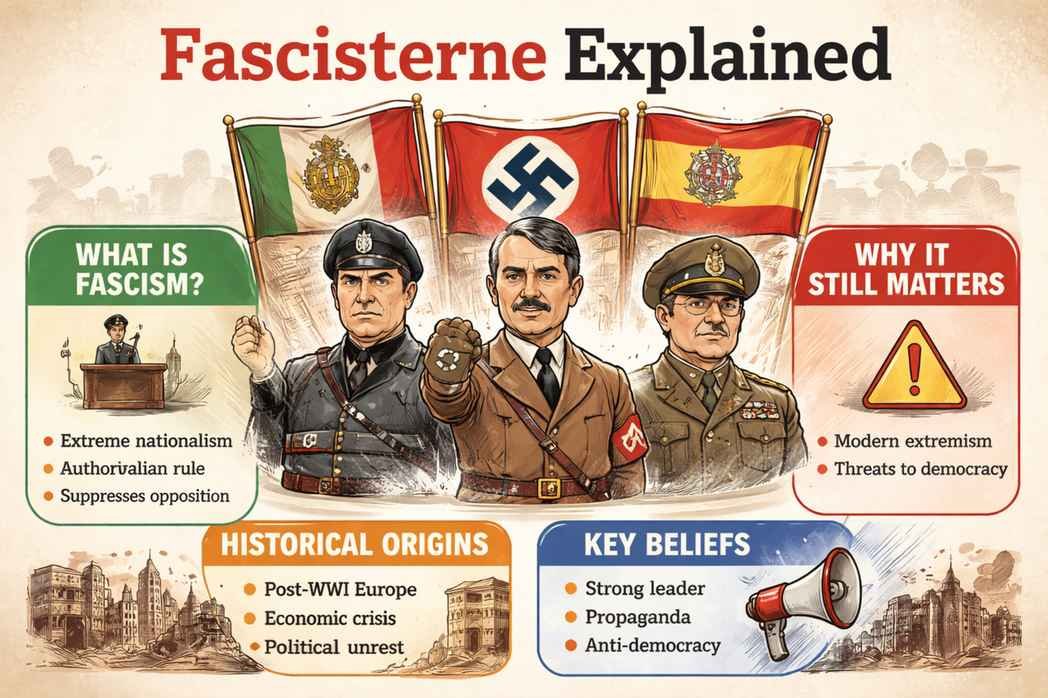
The word fascisterne means “the fascists” in Danish. It is used to describe people or groups who follow fascism, which is a political idea based on strong control by the state, strong national pride, and little or no freedom for people to disagree. Fascism has caused great harm in the past, especially in Europe during the 1900s. Even today, some similar ideas can still be seen in different parts of the world. Learning about fascisterne helps us understand history and protect freedom in the present.
This article explains what fascisterne means, where fascism came from, what fascists believe, how fascist movements gain power, and why this topic is still important today.
1. What Does Fascisterne Mean?
-
Fascisterne = “the fascists” (Danish plural form)
-
A fascist is a person who supports fascism
-
Fascism is a political system where:
-
One strong leader has most of the power
-
The government controls many parts of life
-
People are not free to speak or disagree openly
-
The nation is seen as more important than the individual
-
Main Features of Fascisterne (List)
People and movements called fascisterne often show these features:
-
A very strong leader
-
Strong love of the nation
-
Control of media and schools
-
No freedom for political opponents
-
Blaming certain groups for problems
-
Use of fear to control people
2. Where Did Fascism Come From?
Fascism started in Europe after World War I. At that time, many countries were poor, people were angry, and governments were weak. Many people felt unsafe and wanted strong leaders to fix problems quickly.
Reasons Fascism Grew (Table)
| Reason | Simple Explanation |
|---|---|
| Poverty | Many people had no jobs or money |
| Weak government | Leaders could not solve problems |
| Social anger | People were unhappy and protested |
| National shame | Some countries felt defeated or weak |
| Fear | People were scared of change and chaos |
Early Countries with Fascist Movements
-
Italy – Led by Benito Mussolini
-
Germany – Led by Adolf Hitler
-
Spain – Led by Francisco Franco
These leaders promised to make their countries strong again. Many people believed them.
3. What Do Fascists Believe?
Fascist beliefs are simple but dangerous. They focus on control, power, and national pride.
Core Beliefs of Fascisterne (List)
-
One strong leader
The leader has great power and is rarely questioned. -
Strong nationalism
The nation is seen as better than others. -
Control of people
The state controls what people say, read, and think. -
No free opposition
People who disagree are punished or silenced. -
Use of propaganda
The government spreads messages to shape opinions. -
Group over individual
The needs of the state come before personal freedom.
Fascism vs. Democracy (Table)
| Fascism | Democracy |
|---|---|
| One main leader | Leaders chosen by voters |
| One party or group | Many parties |
| No free speech | Freedom of speech |
| State controls media | Independent media |
| People obey the state | State serves the people |
4. Examples of Fascisterne in History
Fascism has caused great harm in many countries.
Famous Fascist Leaders (Table)
| Country | Leader | What Happened |
|---|---|---|
| Italy | Mussolini | One-party rule, no free press |
| Germany | Hitler | War, genocide, total control |
| Spain | Franco | Long dictatorship, repression |
Results of Fascist Rule (List)
-
Millions of people died
-
Wars caused huge damage
-
Many people were jailed or killed
-
Freedom of speech was lost
-
Minorities were treated badly
Read also: Chief Technical Examiner
5. How Do Fascist Movements Gain Power?
Fascist groups often grow during hard times.
Common Steps to Power (List)
-
A crisis happens (economic problems, war, unrest)
-
People feel afraid and angry
-
Fascist leaders offer simple answers
-
Propaganda spreads strong messages
-
The leader gains more and more power
Tools Used by Fascisterne (Table)
| Tool | How It Is Used |
|---|---|
| Fear | Make people afraid of enemies |
| Blame | Blame groups for problems |
| Propaganda | Spread simple messages |
| Strong promises | Promise safety and strength |
| Attacks on media | Say the press is lying |
6. What Happens Under Fascist Rule?
Life under fascism is hard and unsafe for many people.
Effects on Society (List)
-
No freedom to speak freely
-
Fear of punishment
-
Control over schools and media
-
Discrimination against some groups
-
Violence by the state
Long-Term Effects (Table)
| Area | Long-Term Effect |
|---|---|
| Society | Fear and trauma |
| Politics | Weak trust in democracy |
| Economy | Damage from war |
| Culture | Less freedom for art and ideas |
| Education | Need to relearn history |
7. Fascisterne Today: Modern Times
Fascism in its old form is mostly gone, but similar ideas can still appear today.
Warning Signs Today (List)
-
Leaders attacking the free press
-
Calling groups of people “enemies”
-
Saying elections are fake
-
Wanting more power for one leader
-
Spreading false information
Role of the Internet (List)
-
False news spreads fast
-
Extreme ideas spread online
-
People form closed groups with only one view
-
Hate speech can grow quickly
8. Myths About Fascisterne
Common Myths (List)
-
“Fascism is only in the past”
-
“Strong leaders are always good”
-
“Democracies cannot fail”
Truth vs Myth (Table)
| Myth | Truth |
|---|---|
| Fascism is gone forever | Similar ideas can return |
| Strong leaders fix everything | Too much power is dangerous |
| Democracy is safe | It needs protection |
9. Why Fascisterne Still Matter
Learning about fascisterne helps protect freedom.
Why This Topic Is Important (List)
-
Helps people see danger signs
-
Supports freedom and human rights
-
Teaches the value of free media
-
Encourages critical thinking
-
Honors people who suffered in the past
Key Lessons (List)
-
Freedom needs care
-
Power must be limited
-
People must question leaders
-
History should not be forgotten
10. Conclusion
Fascisterne means “the fascists,” but the ideas behind fascism are more than just history. Fascism shows what can happen when fear, anger, and strong control replace freedom and open society. By learning about fascisterne in simple terms, we can better understand the past and protect our rights today. Democracy, free speech, and human dignity are not guaranteed forever. They must be protected by people who stay informed, ask questions, and stand up for freedom.