Caveator vs Caveatee: Meaning, Roles, Rights, and Legal Importance
In law, there are systems that help protect the rights of people before a court makes a decision. One important system is called a caveat. A caveat allows a person to request that the court inform them before passing any order in a case.
Two important parties are involved in this process:
-
Caveator
-
Caveatee
Understanding these terms helps people know their rights and responsibilities in legal cases, especially in civil disputes, property matters, and inheritance cases.
This article explains the meaning, roles, rights, and differences between a caveator and a caveatee in simple language.
What Is a Caveat?
A caveat is a legal notice filed in court. It tells the court that no decision should be made without informing the person who filed the caveat. The word caveat comes from Latin and means “let him beware.” In simple words, a caveat is a warning to the court that a person wants to be heard before any order is passed.
Main Purpose of a Caveat
A caveat helps protect a person’s rights in legal matters.
Key purposes include:
-
Preventing ex parte orders (orders made without hearing the other side)
-
Giving a person the chance to speak in court
-
Protecting legal interests
-
Ensuring fairness in legal decisions
Where Caveats Are Used
Caveats are used in different types of legal cases.
| Type of Case | Why a Caveat Is Used |
|---|---|
| Civil cases | To prevent court orders without notice |
| Property disputes | To protect ownership or financial interest |
| Probate cases | To stop probate until disputes are resolved |
| Inheritance disputes | To challenge a will or executor |
Who Is a Caveator?
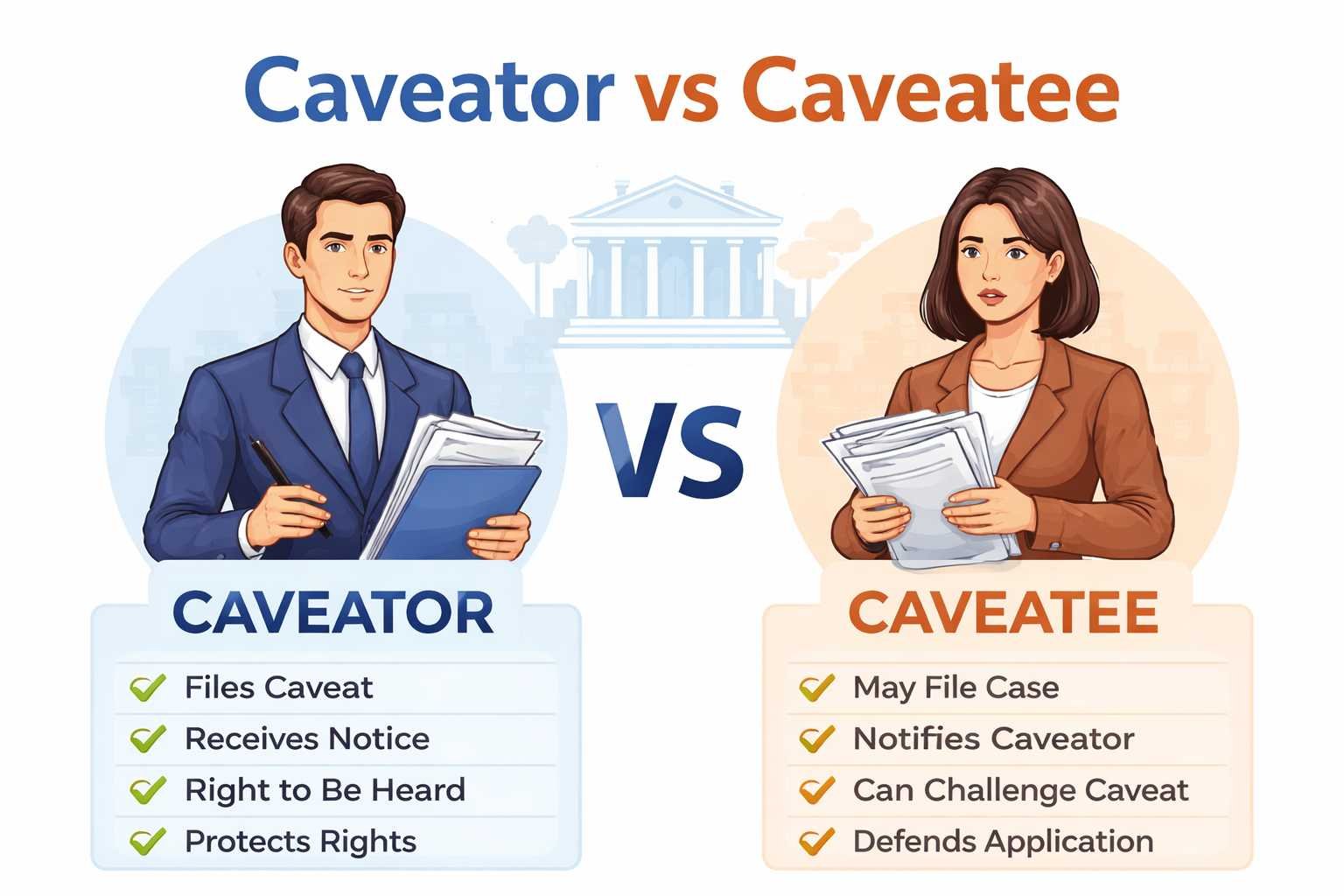
A caveator is the person who files the caveat in court. The caveator believes that another person may file a case or application that could affect their rights. By filing a caveat, the caveator makes sure the court notifies them before passing any order.
Role of a Caveator
The caveator takes action to protect their legal rights.
Main roles of a caveator:
-
File a caveat petition in court
-
Ask the court to give notice before any order
-
Attend court hearings
-
Present arguments or objections
Example
If a person believes someone may file a case related to their property, they can file a caveat so the court informs them before making any decision.
Read also: Right O1 Visa Lawyer
Rights of a Caveator
After filing a caveat, the caveator gets certain legal rights.
Important rights include:
-
Right to receive notice when an application is filed
-
Right to be heard in court
-
Right to oppose ex parte orders
-
Right to present arguments
These rights help ensure the caveator is treated fairly.
Duties of a Caveator
A caveator also has some responsibilities.
Duties include:
-
Informing the other party that a caveat has been filed
-
Providing details about the case
-
Responding to court notices
-
Providing documents if needed
If the caveator does not follow these duties, the caveat may not be effective.
Who Is a Caveatee?
A caveatee is the person against whom the caveat is filed. The caveatee is usually the person who wants to file an application or case in court that may affect the caveator. Once a caveat is filed, the caveatee cannot proceed without informing the caveator.
Role of a Caveatee
The caveatee must follow certain rules when a caveat exists.
Main responsibilities of a caveatee:
-
Inform the caveator before filing an application
-
Provide copies of legal documents
-
Participate in court hearings
-
Answer objections raised by the caveator
This process allows both sides to present their arguments.
Rights of a Caveatee
The caveatee also has rights in the legal process.
These rights include:
-
Right to challenge the caveat
-
Right to ask the court to remove the caveat
-
Right to continue legal proceedings
-
Right to defend their case
These rights ensure that caveats are not misused.
Difference Between Caveator and Caveatee
The caveator and caveatee have different roles in the caveat process.
| Aspect | Caveator | Caveatee |
|---|---|---|
| Meaning | Person who files the caveat | Person against whom caveat is filed |
| Purpose | Protect legal rights | Continue legal proceedings |
| Role | Requests notice before court orders | Must notify caveator before filing |
| Position | Person seeking protection | Opposing party |
In simple terms, the caveator asks the court for notice, while the caveatee is the person who must give that notice.
Caveat Under Civil Procedure Code (Section 148A)
In many countries like India and Pakistan, caveats are allowed under Section 148A of the Civil Procedure Code (CPC). This law allows a person to file a caveat if they expect someone to file a case against them.
Who Can File a Caveat?
The following people can file a caveat:
-
A person expecting a lawsuit
-
A person whose rights may be affected
-
Someone with a legal interest in a case
However, a person must show that they have a valid legal interest in the matter.
Procedure to File a Caveat
Filing a caveat usually involves several steps.
Step-by-step process:
-
Prepare a caveat petition
-
File the petition in the court
-
Include details about the expected case
-
Send notice of the caveat to the other party
-
Wait for the application or case
After the caveat is filed, the court must inform the caveator before issuing any order.
Validity of a Caveat
A caveat is valid only for a limited time.
| Factor | Explanation |
|---|---|
| Standard validity | Usually 90 days |
| Renewal | Must be filed again after expiry |
| Court notice | Required during validity period |
If no application is filed within this time, the caveat may expire.
Caveat in Property Law
Caveats are commonly used in property matters. A property caveat is a warning that someone claims an interest in the property.
Purpose of Property Caveats
Property caveats help protect people in several ways.
Benefits include:
-
Prevent unauthorized sale of property
-
Protect buyers and lenders
-
Stop property transfers until disputes are solved
Who Can Lodge a Property Caveat?
Many people can file caveats in property matters.
Examples include:
-
Property buyers
-
Mortgage lenders
-
People with ownership claims
-
Beneficiaries of trusts
-
People with financial interests in property
Caveat in Probate and Inheritance Cases
Caveats are also used in probate cases, especially when someone disputes a will.
What Is a Probate Caveat?
A probate caveat stops the court from granting probate until the dispute is settled.
Reasons to File a Probate Caveat
People may file probate caveats for several reasons:
-
Doubts about the validity of a will
-
Suspicion of fraud
-
Pressure or influence on the person who made the will
-
Disputes between heirs
-
Questions about executors
Removal or Expiry of Caveat
A caveat does not last forever. It can end in different ways.
1. Automatic Expiry
-
A caveat usually expires after a certain period.
2. Removal by Court
A court may remove a caveat if:
-
It was filed without proper interest
-
It was used to delay legal proceedings
3. Request by Caveatee
The caveatee can apply to the court to cancel the caveat.
Examples of Caveats
Property Example
A buyer who paid a deposit for a house may file a caveat to stop the seller from selling it to someone else.
Probate Example
An heir may file a caveat if they believe the will is fake.
Business Example
A business partner may file a caveat if they expect a legal case from another partner.
Importance of Caveats in Law
Caveats are important because they help ensure fairness.
Benefits of caveats include:
-
Protect legal rights
-
Prevent unfair court orders
-
Ensure both sides are heard
-
Support the principle of natural justice
-
Increase transparency in legal cases
Without caveats, courts might issue decisions without hearing all parties.
Conclusion
The terms caveator and caveatee are important in legal procedures involving caveats. A caveator is the person who files the caveat to protect their rights, while the caveatee is the person against whom the caveat is filed. This system helps courts make fair decisions by ensuring that all affected parties are informed and given a chance to present their case. Caveats are widely used in civil disputes, property cases, and inheritance matters, making them an important part of the legal system. Anyone planning to file or respond to a caveat should consider seeking legal advice to understand their rights and responsibilities.