Authorised Medical Attendant: Meaning, Duties, Eligibility, and Medical Attendance Rules
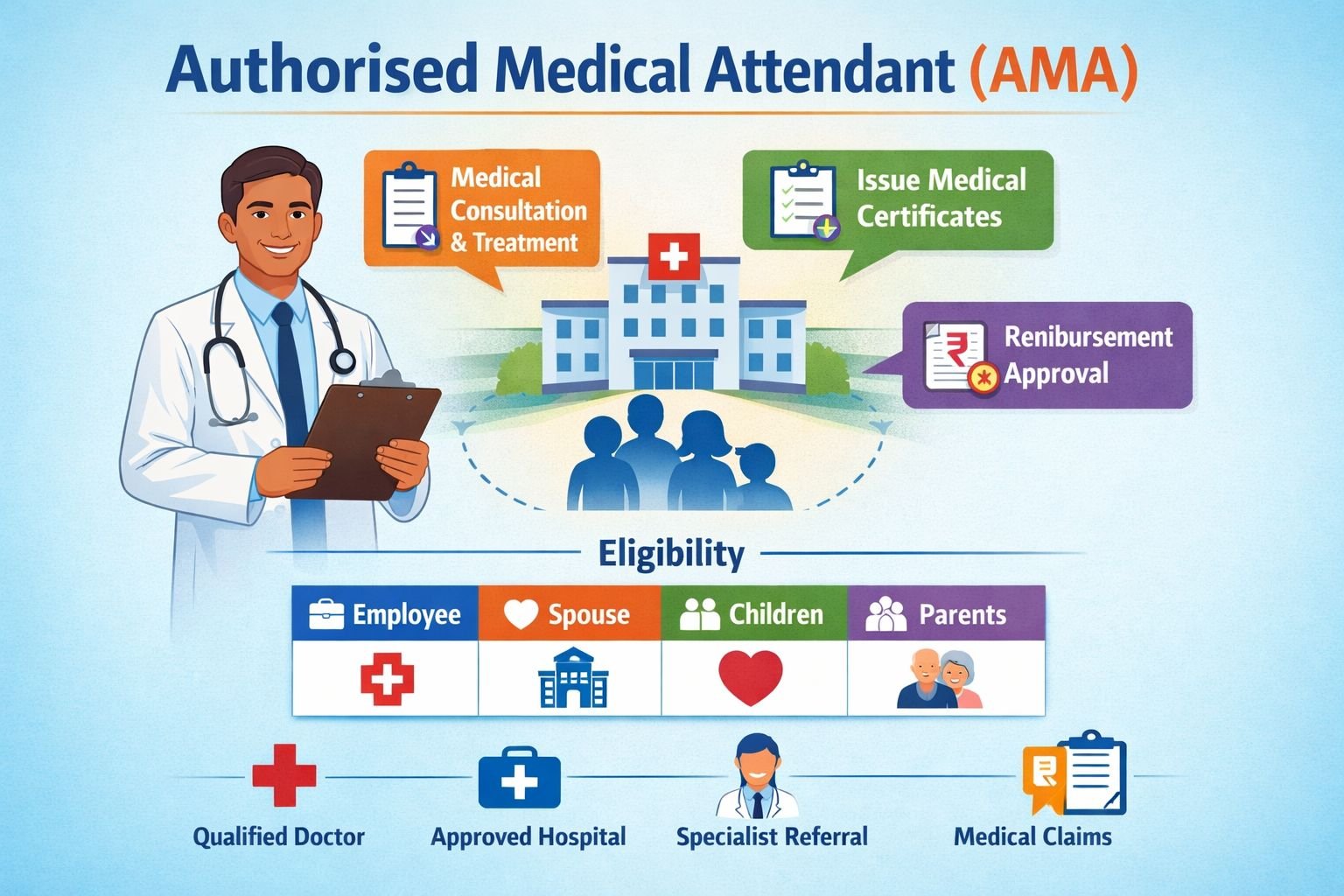
An Authorised Medical Attendant (AMA) is a doctor who is officially approved to provide medical treatment under certain medical attendance rules. These rules are commonly used in government departments, universities, and public organizations to provide healthcare services to employees and their families. The purpose of appointing an authorised medical attendant is to make sure that employees receive proper medical care from approved doctors. It also helps organizations manage medical expenses, hospital treatment, and reimbursement claims in an organized way. An authorised medical attendant acts as the main medical authority for employees. The doctor examines patients, prescribes medicines, recommends hospital treatment when needed, and verifies medical expenses.
Definition of Authorised Medical Attendant
An Authorised Medical Attendant is a qualified and registered doctor who is officially allowed by a government department or organization to treat employees and their dependents.
The authorised medical attendant may be:
-
A doctor working in a government hospital
-
A medical officer in a public health facility
-
A registered private doctor approved by the organization
-
A specialist doctor authorized for certain treatments
The main role of the authorised medical attendant is to provide medical consultation, treatment, and certification according to official medical rules.
Table: Types of Authorised Medical Attendants
| Type | Description |
|---|---|
| Government Medical Officer | Doctor working in a government hospital |
| Hospital Medical Officer | Physician responsible for treatment in a hospital |
| Private Registered Doctor | Approved private doctor recognized by an organization |
| Specialist Doctor | Expert doctor in a specific medical field |
Qualifications and Appointment
To become an authorised medical attendant, a doctor must meet certain professional qualifications and approval requirements.
Basic Requirements
-
A recognized medical degree such as MBBS
-
Registration with a medical council
-
Experience in medical practice
-
Approval or appointment by a government authority or organization
Some organizations also keep a list of approved doctors and hospitals. Employees must get treatment from these approved doctors to receive medical benefits.
Table: Who Appoints the Authorised Medical Attendant
| Organization | Appointment Authority |
|---|---|
| Government Departments | Health Department or Government Authority |
| Universities | University Administration |
| Public Sector Companies | HR Department or Medical Committee |
| Corporations | Administrative Authority |
Duties and Responsibilities of an Authorised Medical Attendant
The authorised medical attendant performs many important medical and administrative duties.
Main Responsibilities
-
Examining patients and identifying illnesses
-
Providing medical treatment
-
Prescribing medicines
-
Issuing medical certificates
-
Referring patients to specialists
-
Verifying medical reimbursement claims
Table: Duties of an Authorised Medical Attendant
| Duty | Explanation |
|---|---|
| Medical Examination | Checking the patient’s health condition |
| Diagnosis | Identifying the illness |
| Treatment | Prescribing medicines or treatment |
| Certification | Providing medical certificates |
| Referral | Sending patients to specialist doctors |
These responsibilities help ensure that employees receive safe and proper medical treatment.
Scope of Medical Attendance
The authorised medical attendant provides several types of healthcare services under the medical attendance system.
Medical Services Provided
-
Medical consultation
-
Treatment of illnesses
-
Prescription of medicines
-
Diagnostic tests
-
Hospital admission if needed
-
Specialist consultation
Read also: Osteopur
Table: Types of Medical Attendance Services
| Service | Description |
|---|---|
| Outpatient Treatment | Doctor consultation without hospital admission |
| Hospital Treatment | Treatment in a hospital with admission |
| Specialist Consultation | Treatment by expert doctors |
| Medicines | Prescribed drugs and medical supplies |
| Medical Tests | Laboratory tests and medical imaging |
These services help employees and their families receive complete medical care.
Role in Hospitalization
Sometimes a patient’s condition becomes serious and requires hospital admission. In such cases, the authorised medical attendant plays an important role.
Hospitalization Process
-
The doctor examines the patient
-
The doctor decides if hospital treatment is necessary
-
The doctor recommends admission to an approved hospital
-
The doctor may refer the patient to a specialist
Table: Steps in Hospital Admission
| Step | Description |
|---|---|
| Medical Check | Doctor examines the patient |
| Decision | Doctor determines need for hospitalization |
| Recommendation | Doctor suggests an approved hospital |
| Specialist Referral | Patient may be sent to a specialist |
This process ensures that hospital treatment is necessary and properly approved.
Role in Medical Reimbursement
Medical reimbursement allows employees to claim back money spent on medical treatment. The authorised medical attendant plays an important role in verifying these claims.
Verification by AMA
The doctor confirms:
-
The treatment was necessary
-
The medicines were prescribed correctly
-
Hospital admission was required
-
Medical bills are valid
Table: Medical Expenses Verified by AMA
| Expense | Verification |
|---|---|
| Consultation Fee | Confirmed by doctor |
| Medicine Bills | Checked against prescription |
| Hospital Charges | Verified after admission |
| Diagnostic Tests | Approved by doctor |
Without the doctor’s certification, many organizations do not approve medical reimbursement claims.
Travel and Referral Functions
Sometimes patients need treatment in another city or specialized hospital. In such cases, the authorised medical attendant can provide a medical referral certificate.
Reasons for Referral
-
Advanced medical treatment needed
-
Lack of local medical facilities
-
Specialist consultation required
-
Emergency treatment situation
Table: Referral Responsibilities
| Function | Purpose |
|---|---|
| Specialist Referral | Direct patient to expert doctor |
| Travel Certification | Confirm need for travel for treatment |
| Treatment Recommendation | Suggest suitable hospital |
This helps patients receive better medical care when specialized treatment is needed.
Family and Dependent Coverage
Many medical attendance programs allow family members of employees to receive treatment from the authorised medical attendant.
Eligible Dependents
-
Spouse
-
Children
-
Dependent parents
-
Other approved family members
Table: Dependent Eligibility
| Dependent | Condition |
|---|---|
| Spouse | Legally married partner |
| Children | Usually within a certain age limit |
| Parents | Financially dependent on the employee |
| Disabled Dependents | Often covered without age limit |
This system ensures that families receive affordable medical care.
Special Medical Situations
Some medical situations require special treatment arrangements.
Examples of Special Cases
-
Emergency medical treatment
-
Treatment at home if patient cannot travel
-
Specialist home visits
-
Vaccination and preventive care
Table: Special Medical Situations
| Situation | Action Taken |
|---|---|
| Emergency Illness | Immediate hospital admission |
| Serious Condition | Doctor visits patient at home |
| Preventive Care | Vaccination or preventive medicine |
| Severe Disability | Special treatment arrangements |
These rules help ensure patients receive medical care even in difficult situations.
Administrative Control
The authorised medical attendant works under administrative rules and medical policies set by organizations or government departments.
Administrative Responsibilities
-
Approving authorised doctors
-
Checking medical certificates
-
Monitoring medical claims
-
Maintaining medical records
Table: Administrative Controls
| Control | Purpose |
|---|---|
| Doctor Approval | Ensure qualified doctors provide treatment |
| Certificate Checking | Prevent false medical claims |
| Claim Monitoring | Ensure proper use of medical benefits |
| Record Keeping | Maintain medical documentation |
This system ensures transparency and accountability in healthcare services.
Limitations and Exclusions
Although the authorised medical attendant provides many services, some treatments may not be covered under medical attendance rules.
Common Exclusions
-
Cosmetic or beauty treatments
-
Luxury hospital rooms
-
Non-prescribed medicines
-
Personal dietary expenses
-
Treatment from unapproved hospitals
Table: Examples of Excluded Services
| Service | Reason |
|---|---|
| Cosmetic Surgery | Not medically necessary |
| Luxury Rooms | Beyond approved hospital category |
| Alternative Therapies | Not always approved |
| Non-prescribed Medicines | No medical authorization |
These rules help control medical costs and misuse of healthcare benefits.
Importance of Authorised Medical Attendants
Authorised medical attendants play an important role in maintaining organized healthcare systems in institutions.
Benefits of the AMA System
-
Ensures employees receive proper medical care
-
Prevents false medical claims
-
Helps manage medical expenses
-
Provides professional medical advice
Table: Benefits of Authorised Medical Attendant System
| Benefit | Result |
|---|---|
| Organized Healthcare | Treatment through approved doctors |
| Cost Control | Reduced unnecessary medical expenses |
| Quality Treatment | Access to qualified medical professionals |
| Efficient Claims | Faster processing of medical reimbursements |
Conclusion
An Authorised Medical Attendant is an important part of many government and organizational healthcare systems. The authorised doctor provides treatment, issues medical certificates, and verifies medical expenses according to official medical attendance rules. Through this system, employees and their families can receive reliable medical care and financial support for healthcare expenses. At the same time, organizations can ensure that medical benefits are used properly and responsibly. Understanding the role of an authorised medical attendant helps employees make better use of medical attendance benefits, healthcare services, and medical reimbursement programs.