Tech Giants Envision Future Beyond Smartphones
For many years, smartphones have been the center of our digital lives. We use them to call, text, take photos, watch videos, shop online, work, and play games. They have replaced many other devices like cameras, music players, and maps. But now, big technology companies are planning for a future that goes beyond smartphones. They believe the next big change in technology will not depend on one device in our hands. Instead, it will be based on smart systems, wearable devices, and artificial intelligence (AI) that work together around us. This does not mean smartphones will disappear soon. Instead, their role may slowly become smaller as new technology grows.
Why Companies Want to Move Beyond Smartphones
There are several reasons why tech giants are looking for the “next big thing.”
1. The Smartphone Market Is Full
-
Most people already own a smartphone
-
People upgrade their phones less often
-
New phones are not very different from older ones
-
Sales growth has slowed down
Because of this, companies want to create new products to keep growing.
2. Strong Competition
-
Many brands sell similar smartphones
-
It is harder to stand out
-
Profit margins are getting smaller
New types of devices give companies new ways to compete.
3. Big Improvements in AI
Artificial intelligence has improved very fast in recent years. AI can now:
-
Answer complex questions
-
Translate languages in real time
-
Summarize meetings
-
Help write emails and reports
-
Plan trips and schedules
This makes it possible to move from app-based use to AI-based assistance.
4. People Want Easier Technology
Many users feel tired of always looking at screens. They want:
-
Hands-free options
-
Faster task completion
-
More natural interaction
This is pushing companies to create smarter systems.
What “Beyond Smartphones” Means
The future is not about replacing the phone with just one new device. Instead, it is about creating a system of connected devices that work together.
From One Device to Many Devices
Today:
-
One main device (smartphone)
-
Touchscreen is the main way to control it
-
Users open apps to complete tasks
Future vision:
-
Multiple connected devices
-
AI helps complete tasks automatically
-
Voice, gestures, and smart displays replace constant screen use
In this new system, AI becomes the center of control.
Read also: Pentagon Big Tech Tesla Cybertruck
Main Technologies Behind the Change
Several important technologies are shaping this future.
1. AI as the Main Interface
Instead of opening many apps, users may simply talk to an AI assistant.
Example:
Instead of:
-
Opening a travel app
-
Searching for flights
-
Comparing prices
-
Booking tickets
You might say:
“Plan a three-day trip next month under my budget.”
The AI could:
-
Search flights
-
Compare hotels
-
Book everything
-
Add the trip to your calendar
This saves time and effort.
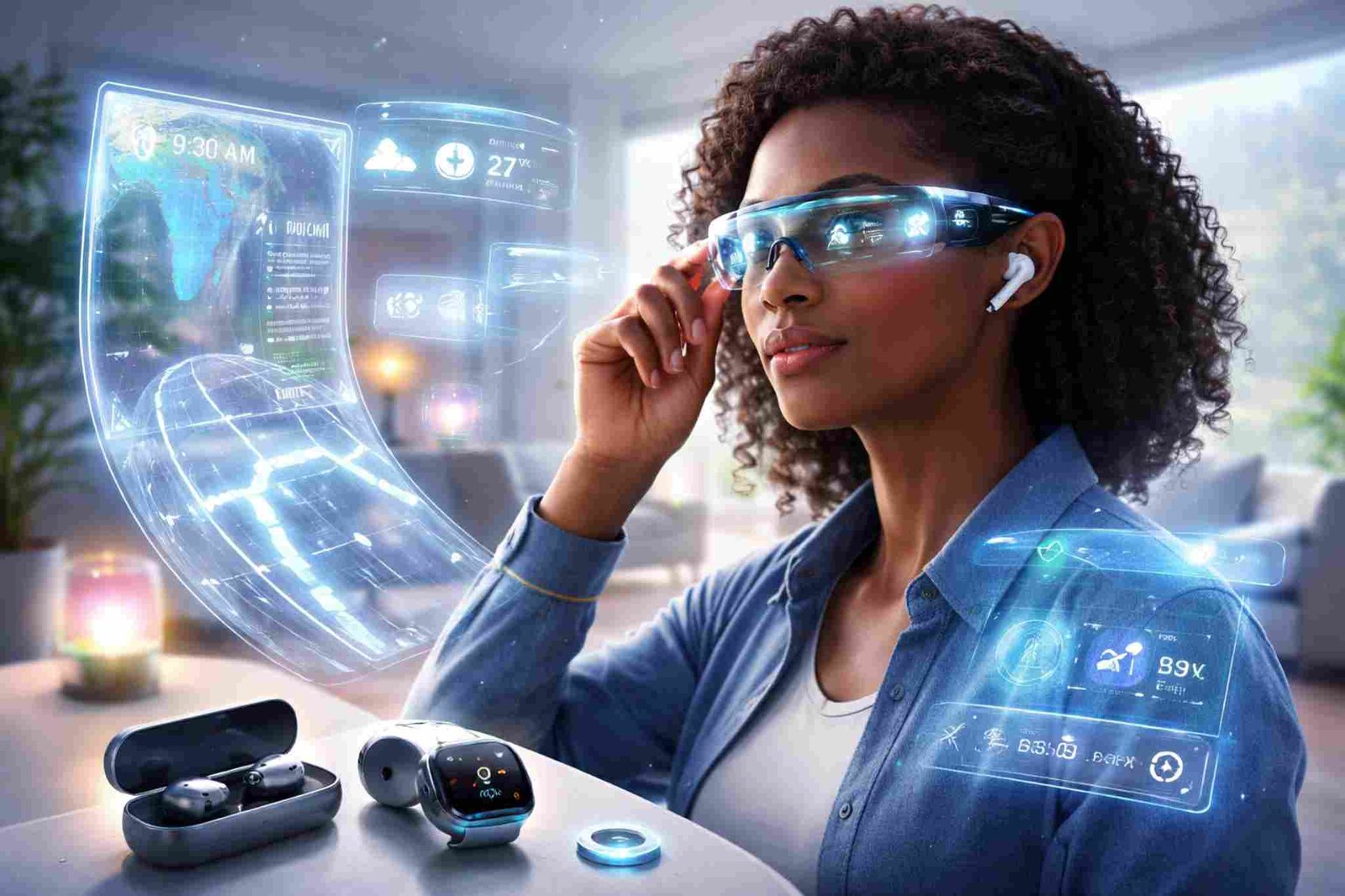
2. Wearable Devices
Wearables are devices you can wear on your body.
Types of Wearables
| Device | What It Does | Why It Matters |
|---|---|---|
| Smart Glasses | Show information in front of your eyes | Reduce screen use |
| Smart Earbuds | Let you talk to AI anytime | Hands-free help |
| Smartwatches | Track health and show alerts | Health monitoring |
| Smart Rings | Track movement and gestures | Small and simple control |
These devices may slowly reduce the need to look at a phone screen.
3. Augmented Reality (AR)
Augmented Reality adds digital information to the real world.
For example:
-
Arrows on the road for walking directions
-
Live subtitles during conversations
-
Product details shown when you look at an item
Instead of looking down at a phone, information appears in front of you.
4. Ambient Computing
Ambient computing means technology works quietly in the background.
Examples:
-
Lights turn on when you enter a room
-
Music follows you from room to room
-
Your car adjusts settings automatically
-
Your home temperature changes based on your habits
You do not always need to press buttons. The system understands your needs.
How the Future System May Work
All devices will connect and work together.
| Part | Role |
|---|---|
| AI Assistant | Main brain of the system |
| Wearables | Main way to interact |
| Cloud Systems | Store and process data |
| Sensors | Detect movement, voice, location |
| Internet (5G/6G) | Connect everything instantly |
AI connects all parts and makes them work smoothly.
Real-Life Benefits
For new technology to succeed, it must help people in real ways.
Communication
-
Real-time language translation
-
Automatic meeting summaries
-
Smart replies to messages
Navigation
-
Visual walking directions
-
Traffic alerts
Shopping
-
Voice shopping
-
Instant price comparison
Health
-
Heart rate tracking
-
Sleep monitoring
-
Early health warnings
Work
-
Automatic document writing
-
Smart scheduling
-
Research help
Challenges and Problems
Even though the future sounds exciting, there are serious challenges.
1. Privacy Concerns
-
Always-on cameras
-
Always-on microphones
-
Biometric data collection
People worry about how companies will use their data.
2. Security Risks
-
AI systems could be hacked
-
Personal data could be stolen
-
Identity theft risks
Strong security will be very important.
3. Device Problems
-
Battery life is still limited
-
Smart glasses must be lightweight
-
Devices must be comfortable to wear
4. High Costs
-
New technology is expensive
-
Not everyone can afford early devices
Prices may drop over time.
Smartphone vs Future Technology
| Feature | Smartphones Today | Future Vision |
|---|---|---|
| Main Control | Touchscreen | Voice and AI |
| Device Type | Single device | Multiple devices |
| Task Method | Manual app use | AI automation |
| Interaction | Screen-based | Hands-free and visual |
| Personalization | App settings | AI learning your habits |
How the Change May Happen
The shift will happen slowly.
Short Term (1–3 Years)
-
Stronger AI inside smartphones
-
More advanced smartwatches and earbuds
Medium Term (3–7 Years)
-
Smart glasses become more common
-
AI assistants handle more tasks
Long Term (7+ Years)
-
Smartphones become secondary devices
-
Wearables and AI become primary tools
What This Means for People
For Users
-
Less screen time
-
Faster task completion
-
More personalized help
-
More privacy decisions to think about
For Businesses
-
Must design services for voice and AI
-
Focus more on trust and data protection
-
Move beyond app-only strategies
Conclusion
Smartphones changed the world and made digital life easy and portable. But technology keeps moving forward. Big tech companies are now building a future where AI, wearable devices, and smart environments work together. Instead of always looking at a screen, people may talk to AI, see information through glasses, and live in smart spaces that respond automatically. Smartphones will not disappear soon. However, they may slowly become less important as smarter and more natural systems take their place. The future beyond smartphones is about making technology simpler, faster, and more helpful in everyday life.